Showing posts with label Science of Learning. Show all posts

Friday, August 10, 2012

Bean Bag and Balloon Olympics


With the arrival of the Olympics, my boys are in an especially competitive mood, eagerly desiring to showcase their athletic prowess!  But the heat this last week has been I.N.T.E.N.S.E!  I think I may have chosen one of the hottest days of the year to run errands in the middle of the afternoon. ugh.

So in light of the heat, we decided to do an {indoor} Balloon and Bean Bag Olympics.  The beauty of many of these activities is that they are a means of getting active, burning some of that boundless boy energy and activating their little brains to learn.

I've mentioned it in my last two posts, but I cannot emphasize enough how important MOVEMENT is to wiring the brain to learn.  So with that in mind, here are several fun activities that will help increase oxygen flow to the brain, stimulate the vestibular system and increase bilateral integration - all vitally important to the learning process!

Let the games begin!

Balloon Events


1. Balloon Tap Race ~ Pick the longest open stretch in your home and stage a relay race where you tap the balloon in the air to one end and back! Be sure to cheer on your teammates in the process!
2. Balloon Face Race ~ Repeat the relay but this time, get on your hands and knees and push the balloon with your face!


3. Volleyball ~ This started just as a tapping back and forth with my youngest, but soon morphed into a more nuanced volleyball match. Chairs can be lined up to act as the net. You can play to see who can keep it afloat on their side of the 'net'. We ended up instituting a 'no spike' rule.

4. Foot Volleyball ~ This is the activity that sparked the whole idea of our Balloon Olympics when I saw it on pinterest! As a team see how long you can keep a balloon in the air using only your feet.

5. Stationary Tap ~ With feet glued to the floor, see how long they can tap the balloon in the air with one finger!


Bean-Bag Events
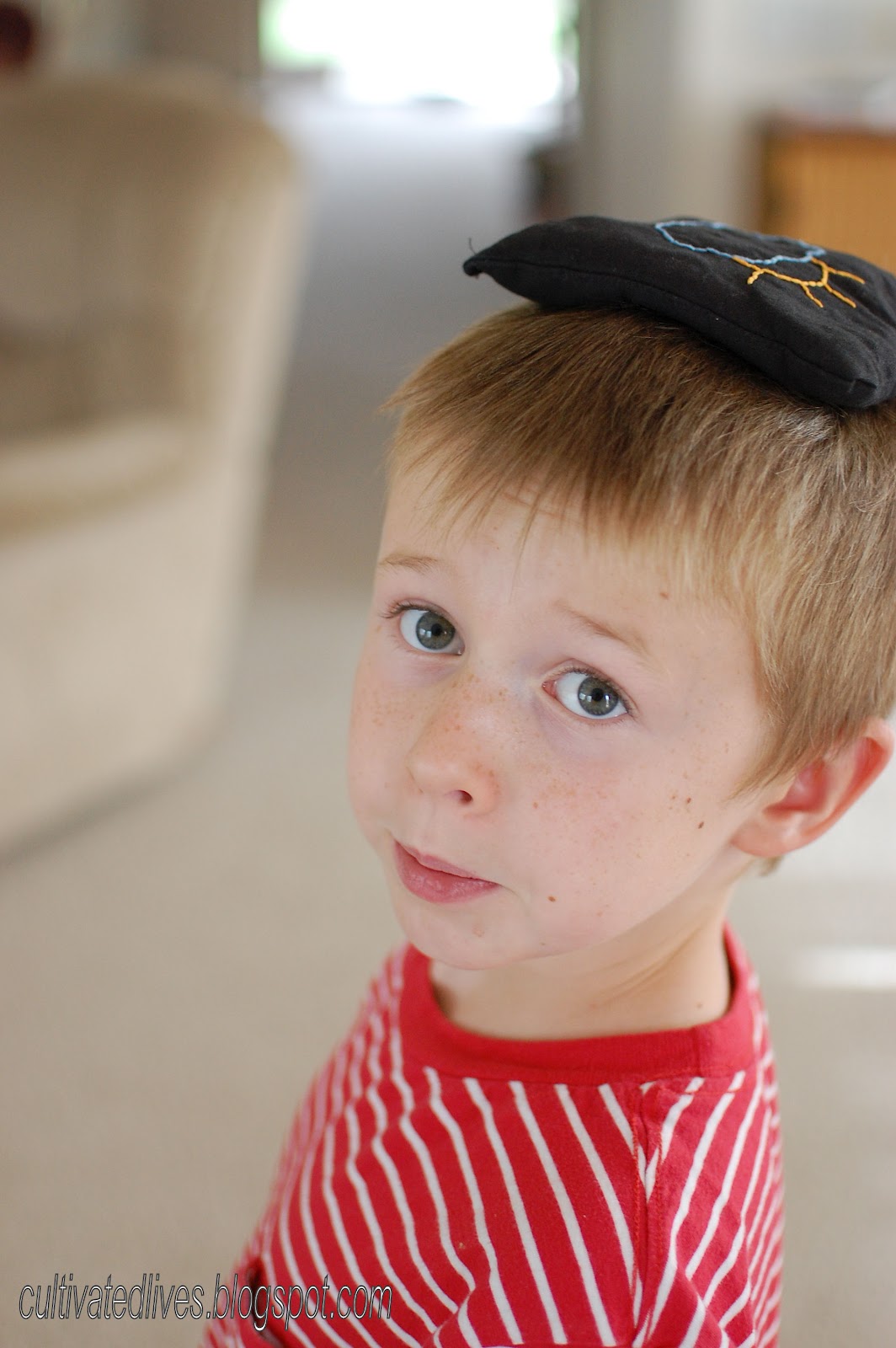
1. Head Relay ~ Classic balance game.  We raced the longest indoor length in our home several times.  This is a great way to learn that accuracy and balance makes for faster race times than speed alone. 


2. Bean Bag Crossover ~ This great game requires balance.  While sitting on a ball and one hand held behind your back take the opposite arm and cross over to grab one bean bag at a time and move to the opposite bucket.  Each of the boys biffed it several times and we couldn't contain the giggles that this challenge induced!


3. Hit the Square ~ Tape a square on the floor and see how many bean bags you can toss into the target.  Beware of the baby.  Tape on carpet is quite alluring!

4. Toe-to-Toe Relay ~ Conduct a relay race where you balance a beanbag on top of each foot. See how long it takes you to devise a strategy to keep them there!

5. Bean Bag Balance Beam ~ We set up wooden blocks for our balance beam and set out to see what kinds of 'tricks' we could do while maintaining balance!

Tuesday, May 3, 2011

Experiential Learning

My last post really got me pondering again the benefits of experiential hands-on learning.  When this happens, I sort of 'geek-out' and start looking at the research again...

I have so many fond memories from my own childhood homeschool experience.  I was pulled out of 1st grade after a disasterous first semester.  After a tentative first couple of years we settled into a lifestyle of learning and never looked back.  Something that I liked most about it was the ability to enjoy a more hands-on, experiential way of learning.  When you eat, breath and really experience what you are learning about, it sticks in a way that just reading, listening or rote memorization just can't do.

The famous research by Edgar Dale shows the rates of retention with various types of learning.  Here's how it breaks down.


Learning that incorporates a multi-faceted approach will really build on the strengths that each has to offer. 

So in case you were wondering, I'm really not making this stuff up.

Much of my learning, growing up included elements from the bottom half of the pyramid above.  We not only read and talked about something, we experienced it. 

This is effective not only with little kids, but also older one's as well.  I used a lot of the hands-on learning that I had experienced in my childhood when I was at college.  It worked not only for me, but also with the students that I tutored when I taught the Human Anatomy and Physiology lab at ASU.

Thankfully, more schools out there are embracing this project-driven, hands-on, critical thinking type of approach as I saw in this article I reviewed last year.  I still just love how homeschooling provides a unique environment to personalize these hands-on interactions to fit the needs and interest for our children as individuals!

Ok, I'm off to try and get some sleep.  I feel like a kid on Christmas eve... We find out what we are having tomorrow and I'm just so excited!!!  haha, I'm one of those that likes the surprise in the middle of the pregnancy! :)  We'll be surprising our boys and the rest of the family tomorrow night and hopefully giving you all an update in the next day or two whether or not we will continue to specialize in boys or diversify!   Talk to you all soon!

Sunday, May 1, 2011

Becoming Butterflies...


We've been quite busy over here working on 'becoming butterflies'.  As we learn about patience, our explorations have led us to explore the phenomena of metamorphosis.  In addition to reading some great books like, It's a Butterfly's LifeHoudini the Amazing Caterpillar and The Prince of Butterflies, we had some friends over for some hands-on fun! 

I'm a big fan of making things hands-on and interactive.  This is just ever so much more fun than simply printing off a life cycle printable and gluing pre-designed pictures in order on a piece of paper or labeling some worksheet.  Not only is hands-on learning more fun, it is also a better way to boost long-term retention rates!  They simply learn better this way!

We started out by putting together the stages of a butterflies life to show the dad's later that day and anyone else who would listen to them share over the following week! 

 Nothing quite like the thrill of paint and googly eyes!  The kids enjoyed designing their own caterpillars!

After reviewing how caterpillars simple eyes (hence the googly eyes) then change to compound eyes during metamorphosis, the boys had fun adding left over jewels from our medieval celebrations onto their butterflies!
 But the highlight of the morning was when the boys dramatized the life-cycle of a butterfly.

First, there were five little eggs...
 That hatched and ate everything in sight.  They ate and molted and ate and molted. 

Before forming a chrysalis (or sliding feet first into a sleeping bag).
 
Wriggling, shaking, changing...


Before finally emerging with wings...

Discovering that this whole metamorphosis stuff is exhausting!!!

But worth it for these wriggly little boys! :)


I hope you enjoy a bit of hands-on adventures this week!

Related Posts:
What Comes First: Activity or Content?
Goal: Lovers of Learning
Of Kangaroos and Icing...

Wednesday, February 9, 2011

What Comes First?

I couldn't help but think about the question, "What comes first, the chicken or the egg?" when thinking about our educational adventures last week.  Of course in this situation it was, "What comes first - activity or content?"

My usual educational mode is to read, read, read about a subject and then incorporate hands-on activity to solidify what they are learning.    While I sometimes intimidate people and give the impression that we are always busy with fun, super creative ideas, most days will find us curled up on the couch, reading for our 'school time'.  Often times learning that is too heavy on 'activity' and low on the content, while fun, doesn't lead to lasting retention of anything other than 'fun times'.  There really needs to be a marriage between activity and content with dialogue to insure that the combination is resulting in understanding.  But one doesn't necessarily always have to proceed the other...

This last week, we were set to learn about the role of Kings/Queens as a part of our KONOS unit on Obedience.  One of the things that I wanted to specifically address was the coronation process.  But each time I pulled out one of the Usborne books we had on kings to point out the page on coronations, their eyes just glazed over.  They would proceed to ply me with related favorites of theirs, like The Kitchen Knight: A Tale of King Arthur.
As Friday approached, I realized that we were either going to skip the coronation process or continue to fall behind...  So I mixed things up - and announced from the get go that we were going to have a coronation that day.  Having a purpose to exploring the more detailed books lent excitement and anticipation to the process.  They got so excited looking at the pictures and then devising ways to incorporate it into our dramatic play.

So sometimes good books can spark curiosity about a subject and other times our kids might need some kind of fun activity to spark interest in pursuing the information provided in the books!

Teaching is an exciting, but sometimes baffling experience.  It is always helpful to have a reminder that when something isn't working, try changing things up a bit.

I also wanted to mention that I will be hosting the Hands-On Homeschool Carnival on Monday.  If any of you dear readers would like to submit a post that tells about a hands-on project (art project, dramatization, etc) I would love to include it.  Just follow the link on the badge below and follow the directions to submit your post by Sunday evening!

Friday, January 7, 2011

Learning Rewards...

Learning enriches our lives. By that I mean that it makes everyday interactions more enjoyable!  

I experienced that this last fall when my Bible study group was going over Daniel.  That one highschool year of delving deep into ancient world history paid off in huge dividends as we explored the book of Daniel in depth.  I was just amazed as I unpacked all of the biblical prophecies about the Babylonian, Medo-Persian, Greek and Roman empires.  Because I already had a rich understanding of these cultures, it made the comprehension and appreciation for what God spoke to Daniel so much easier to understand.  'A-ha' moments galore!

One of my top academic goals is to instill in our children a love of learning.  If they have the inner drive to want to learn, to thirst for knowledge, it is going to be so much easier to equip them with the skills to feed this drive.  And once that is accomplished, they will be set for a life-long exciting journey of discovery and application!

The wonderful thing is that we get to taste some of those sweet rewards of our learning adventures even now at these young ages...

I've had books relating to Africa lying around the house for the last two months. With all of our travel, theater performances and then sickness we sort of meandered through them. But the week after Christmas brought the payoff!

After a morning of reading through some of our favorite books on the African Savannah (countries of Kenya and Tanzania) I rewarded them with a movie night! I could not believe how much more they enjoyed The Lion King after we had read books on the region.

Keegan squealed with delight when he saw Rafiki (which we discovered means 'friend' in Swahili) climbing around in the Baobab tree. He was delighted because he KNEW what kind of tree that was and why it was so important to animals in the Savannah.   The excitement was almost tangible as each of the boys spotted things in the movie and made connections because of their newly acquired knowledge of the African Savannah!  It really enhanced their experience.

Being a mom is a lot of work.  And being their primary teacher to boot makes the job even more intense.  But the rewards are so sweet.  Getting to sit back and watch my kids make those connections and enjoy life more because of what they've learned was the adrenaline rush I needed to plan out and keep going strong on this wonderful adventure of learning together!

Monday, September 13, 2010

Of Kangaroos and Icing!

As we explored the wonderful and wacky world of Australian animals, I had to wonder if my husband would be ok, with the pictures I'm about to post...  The boys L.O.V.E.D. pretending to be mommy kangaroos.  Our trusty playsilks came in handy as make-shift pouches for beloved teddy bears. 

He was a-ok with it, in the name of education of course! :)

The boys loved measuring to see how far they could jump, but were a little bummed out that they couldn't jump anywhere close to the 25 feet that some kangaroos can jump... 

Naturally, Treyton wanted in on the action too!  Hearing him try to say Australia is just priceless.  I should try and get that on video, shouldn't I?

A highlight for them was the discovery of this charming series on youtube that follows two baby joeys shortly after birth until they are hopping in and out of their mother's pouch.

After reading and exploring thru books at home, we set out for a little bit of real life 'down under' exposure at our zoo.  The heat got to us before we made our way to the kookaburra's (we'll just have to serenade them later), but we enjoyed watching the wallaby brothers hop around and checked out the new koala exhibit which is set to open at the end of this month.

I was struck by how knowledge really enhances experience.  As much as I tout hands-on experience and learning through doing, this works best if it comes after or alongside knowledge acquisition. 

There are two schools of thought.  One is that you do a field trip or activity to pique curiosity in a subject.  The second is to learn about something first through books and then follow it up with an activity or trip.

Many times in my life I visit a place about which I know absolutely nothing.  My curiosity is piqued and I want to explore, but only rarely follow-up on that awakened interest.  There are certainly times when this happens and it can have definite benefits.

But when we've already learned about something, real life experiences just come alive as one makes interconnections with information that is already filed away in the brain. 

I've seen time and time again that it is no different with my children.  We go to the zoo a lot.  We love our zoo and during our good weather months go 3-4 times a month.  But this last week the boys intently watched the wallabies in a way that is altogether different.  They marvelled at how large their feet were because they know that God created them that way, so they could make those long leaps.  Immediately, they looked for that pouch and were disappointed to be told that there were only boys at our zoo.  They took note of the eucalyptus trees that were growing around the exhibit and excitedly tuned into the aboriginal music featuring their new favorite musical instrument: the didgeridoo.

It is beautiful to watch these connections being made.  It was like icing on the cake.  So tasty, but without the book explorations and dialog [cake] to provide structure and a framework, we'd just have a a tasty mess on the cake platter.  Pairing the icing with the baked cake makes for a beautiful and rewarding treat!

And since I can't leave you all without some book recommendations, here were some of our favorites on the wildlife in Australia!

Thursday, September 2, 2010

Down Time

This last week, my family escaped up north and spent lovely relaxing week away from our cell phones and computers. I don't watch TV (except for an occasional movie), but I'm pretty addicted to my phone and my computer, so this was a much needed break.
It was fun to actually be outside A.L.L. D.A.Y. L.O.N.G!!!!! After being a little home bound because of the heat, it was a welcome break to get to breath fresh, cool air and play in the great outdoors.  We all needed the downtime and despite being in the same cabin, all approached it a little differently!

An interesting article came out in the New York Times concerning recent research on the importance of downtime for adults as well as kids.

It is a well known fact that kids need downtime. Free play allows their minds to synthesize and process what they are learning about. Without this downtime kids are merely getting a lot of sensory input, but making very few meaningful and lasting connections. This was a key point that I brought up in our talk on Cultivating Curiosity at the AZ Homeschool Convention this summer.

We need it too!  Why?

Embracing quiet moments helps us to:
  • unwind
  • release stress
  • internalize and remember what we've learned
  • work through solutions  (Have any of you ever worked on a problem right before bed, only to wake up knowing how to solve it???)
  • increased ability to listen - both to God and those around us!
I find it interesting that we really aren't that different from our kids in our need to slow down and process experiences.

The technology makes the tiniest windows of time entertaining, and potentially productive. But scientists point to an unanticipated side effect: when people keep their brains busy with digital input, they are forfeiting downtime that could allow them to better learn and remember information, or come up with new ideas.
Apparently, taking some moments here and there to just be quiet isn't such a waste of time after all!

So what are some ways that we can reduce sensory overload and grant ourselves some precious downtime:
  • Get outside! With the kids and without them, time walking outdoors without your ipod or phone can work wonders!
  • Just take a few moments to lay on your back and stare up at the sky!
  • Exercise [outside] and give yourself time to allow your mind to wander. Leave the ipod at home!
  • Put a puzzle together.
  • Take a relaxing bath
  • Read a 'fun' book. My sister has to help me out with this one, because I'm usually reaching for a scientific/research/educational book. She is so good about making me pick up a novel!
  • Blow bubbles. It works for grown-ups too! This was my top stress buster when I was in college. It also helped when my children were learning to sleep and when I'm just having a hectic mommy day. Stepping outside and methodically blowing bubbles is awesome!
  • Strategically grab small snatches of alone time. Even if it's 5 minutes in the bathroom.
  • Sleep. We really do need it.
  • Taking a short moment to stop and pray -focusing on the listening part! Remember, prayer is a conversation. Sometimes you talk and sometimes you just sit back and listen...  When I do this, usually the whole tone of my day changes.  Talk about instant clarity!
What helps you unwind? What do you do to rest your mind and quiet your soul?

I never want to be the kind of parent who always says (or implies), "Do as I say, not as I do."  If I want my kids to really internalize something, I need to first be willing to model it.  This is not easy for me since it is easy to limit their screen time while spending way too much in front of my screen of choice (computer).

Wednesday, August 18, 2010

Mission-Minded, Part 4

Lover of Learning

As I look over all three goals for my family (1-being lovers of God, 2-lovers of others and 3-lovers of learning) it is hard to separate where one stops and the others start.  Really, #2 and #3 are just natural outpourings of #1.

If we truly love God, the natural result is going to be one of loving other people and joyfully exploring His creation. How can we hate someone who is created in the image of God and who is loved by God?  How can we not help but marvel at His beautiful creation or the intricate ways that things work together?

I believe God placed in each of us a desire to know about the world around us! Just look at any young child and you will usually see an eagerness to learn. Our job as parents is to preserve, protect and grow that love of learning.

I think back to my childhood. Learning occurred in a natural, holistic way in our home. Questions were encouraged and resources made available to discover answers. Time was always made to follow down bunny trails. Because of this, we not only received a good education growing up, but we gained something far more valuable – the desire and know-how to continue this journey of learning. It wasn’t about the books or the grades. It was about the thrill of discovery and the excitement of sharing. We didn’t just read about cool things, we DID them! Even when we would watch a movie, we would usually be motivated afterwards to discuss it, research the authenticity of a story and learn more. We never just mind-numbingly watched movies. It was always with the natural motivation to discuss, discern and expand on what we had heard.  Learning was an everyday, all the time occurance!

I would like to extend this love of learning to my boys. My goal is to cultivate their natural curiosity and let that fuel their desire to learn.

During these early years a child’s brain is actually wired differently than an adult’s brain. We think in a linear fashion. Our brains work to find the quickest, most efficient way to solve a problem. Our brains are stream-lined. A child’s brain isn’t wired like that – yet. In these early years they are taking in stimuli from all around. Instead of being product (goal) oriented, they are more process oriented. They need time to enjoy the process of learning, so they can maximize the connections in the brain. The more they are able to do this, the better off they will be in the long-run.


So I work to provide an interesting environment. We read voraciously, talk, run and play. The primary way young children learn is through play. They need concentrated time playing with me, but they also need time to explore and apply what they have learned on their own. Playing pretend really helps them to internalize what they are learning. Two ways that I help make room for this: severely limiting TV/movies and being careful to not “over schedule” them by planning activities (even good one’s) and orchestrating/guiding every moment of their lives.

In my Cultivating Learning page up top, I’ve listed out some of my favorite articles and resources on this dearly beloved topic!

Mission-Minded: Part 1, Part 2, Part 3

Wednesday, July 21, 2010

The Creativity Crisis

An interesting article came out last week in Newsweek magazine titled, The Creativity Crisis.  It talks about how research is showing a very significant decrease in creativity in Americans - most notably those in K-6th grade.

As I gear up for our workshop on cultivating curiosity this weekend, I'm struck by the interplay between curiosity and creativity. Curiosity - that inquisitiveness that wants to learn about everything, ask why and figure things out is such an important component in creativity.

I just love how the article defined creativity because it helped me see how multi-dimensional creativity really is:

"To be creative requires divergent thinking (generating many unique ideas) and then convergent thinking (combining those ideas into the best result)."
This skill is desperately important in a world that needs creative solutions to so many complex problems. It is a skill well worth developing. In fact, the article mentioned that a recent IBM poll of 1,500 CEO’s identified creativity as the #1 “leadership competency” of the future.

So if the most notable drop is in the early years, than is there anything we can to do nurture this creativity in our children?

The answer to that is YES and it is being done many places all over the world. What I found particularly interesting was how it talked about the improvements China is making in their system of education. "There has been widespread education reform to extinguish the drill-and-kill teaching style" over there and instead adopt a problem-based learning approach. The sad thing is that the trends in American education are just the opposite and not just in the elementary grades.  It is happening earlier and earlier. When told of American priorities the Chinese just started laughing and said, "You're racing toward our old model. But we're racing toward your model, as fast as we can."

I love how the article also lays out what it looks like for each general age-range to pursue creative development.
And surprise, surprise one of the most effective ways to encourage and foster creativity is thru imaginative PLAY! Role-playing is a great way to develop creative solutions to problems and provides a 'safe' realm for the child to do this.

Imagine that, stepping back and giving your young child time to explore and play while limiting creativity killers like TV, movies and video games can be so effective in accomplishing these goals of fostering creativity.  It is just mind boggling to think that it can be that simple.

As parents we need to pursue opportunities for our children to do just that – play, think critically and engage in the world around them instead of relying on a faulty system that my mom refers to as a ‘pete and repeat’ form of education. If your children are in school, you can call for reform and a return to schooling that encourages creative thinking. The article had many examples. And if you are homeschooling your children, or have young pre-formal school aged children, you have the opportunity and flexibility to think outside of the typical ‘school’ box. We can ditch the printables, flashcards and fill-in-the blank style of education and pursue something that will light our children’s curiosity and propel them towards devising creative solutions to real problems!

Yes, this article is well worth the read.  I'm still mulling it over and trying to think practically what this means to me as a parent and teacher.  I'd love to hear what stood out to you from the article.

Friday, July 2, 2010

A different kind of brainy...

(my niece, busy at 'work' on a puzzle)

If I had a dollar for every time I heard a parent say that their baby/toddler/preschooler was gifted/advanced/etc, I would be a wealthy woman.

And really, it's not surprising.  Children develop and grow at such a rapid rate, especially those who live in a rich home environment with lots of loving parental interaction.  Long ago, I too joined the ranks of beaming parents touting the newest milestone that my child reached.  It is a delight to watch your child learn something new or conquer a new feat!

And research is proving what many of us parents already know.  God created human beings with an amazing ability to learn and this starts from birth!

While it is good to nurture and help them grow, given the competitive culture we live in, we must always be mindful of not pushing our children in ways that aren't developmentally appropriate in an attempt to 'keep up with the Joneses' or prove to others just how smart our kids really are.  This just causes stress for both parent and child and can result in losing that precious love of learning that most children have!

Recently I read a fascinating article in the New York Times that gives a peak into research that continues to confirm the incredible work that young brains are capable of doing.

While research is increasingly showing how smart young children are, it is also confirming how different their thought processes are to ours as adults. 

Many think that babies, like adults, should learn in a focused, planned way. So parents put their young children in academic-enrichment classes or use flashcards to get them to recognize the alphabet. Government programs like No Child Left Behind urge preschools to be more like schools, with instruction in specific skills.

But babies’ intelligence, the research shows, is very different from that of adults and from the kind of intelligence we usually cultivate in school. Schoolwork revolves around focus and planning. We set objectives and goals for children, with an emphasis on skills they should acquire or information they should know. Children take tests to prove that they have absorbed a specific set of skills and facts and have not been distracted by other possibilities.

This approach may work for children over the age of 5 or so. But babies and very young children are terrible at planning and aiming for precise goals. When we say that preschoolers can’t pay attention, we really mean that they can’t not pay attention: they have trouble focusing on just one event and shutting out all the rest. This has led us to underestimate babies in the past. But the new research tells us that babies can be rational without being goal-oriented.
The rest of the article goes into some of the research they are doing that demonstrates how babies and toddlers are able to employ probabilites and engage in some higher order thinking skills during play.

It also confirms the most important ingredients to a young child's success in later life: loving parental interaction and lots of time to play! 

"But what children observe most closely, explore most obsessively and imagine most vividly are the people around them. There are no perfect toys; there is no magic formula. Parents and other caregivers teach young children by paying attention and interacting with them naturally and, most of all, by just allowing them to play."
I don't know about you, but I'm inspired to put aside my computer, chores, etc and get down on the floor more to play, talk and just enjoy my kids.  Yes, it can really be that easy!

Wednesday, June 16, 2010

For the Children's Sake and other reads...

For the Children's Sake by Susan Schaeffer Macaulay

After a friend had mentioned reading this book, I scanned my mom's bookshelf and found her well-worn copy that she bought back in the mid 1980's. The cover art is obviously different from the new edition, pictured here, but I didn't want to scare anyone away from this amazing book with the 80's artwork.  (Although aren't the 80's back in vogue?!?!?)

As I read, I was inspired in the way I view my parenting and my children. While not specifically a 'homeschool' book (in fact her children were in all kinds of school both formal and at home), I really feel like she gets to the heart of what it means to parent and lays out a beautiful philosophy for raising children. It confirmed many of the thoughts I'd been having and confirmed the calling I felt to educate my children at home.

She really challenges modern notions of 'school' and 'education'. Education is so much more than simply sitting at a desk and learning skills. Learning is a beautiful, creative and fulfilling way of life. It has been incredible to see our home transform into a place where we are all seeking to learn and respecting the different capacities and levels that each one is at - both child and adult alike. There is joy in the discovery and it has been a delight to watch my children discover more about the incredible world around us.

I also appreciate Macaulay and Charlotte Mason's respect for young children and their need to 'play to learn'. Both advocate a very developmentally appropriate approach to early education!

I can't say enough about it. If you have kids, read it!


Other books I have LOVED include: )

Miseducation: Preschoolers at Risk by David Elkind. Again, not a homeschool book, but an awesome book on what is healthy and appropriate learning in the preschool years. We live in a culture where there is a lot of pressure to build our toddler/preschoolers brain and 'do' formal academics with them. Elkind, a renowned developmental psychologist, dispels the myth that this is good and in fact shows how dangerous it can be to push academics at an early age. From the description on Amazon: "Development in toddlers, he cautions, can be seriously damaged by parents' well-meaning rush to give them a head-start on education or in sports. Preschoolers ought to be encouraged in their spontaneous learning rather than given formal instruction that teaches them "the wrong things at the wrong time." Incredible book, especially if you are feeling pressure from well-meaning friends/family or struggling with not wanting your toddler/preschooler to be left behind.

Einstein Never Used Flashcards: How Our Children Really Learn and Why They Need to Play More and Memorize Less. This super helpful book is chock full of information on scientific studies of how young children learn and cautions against the rush to cram academics. Like Dr. Elkind does, they point out that there is no evidence that early academic training has any long term benefits and in fact can cause harm. One of my favorite parts when I read it several years ago were the sections that layed out developmental milestones and 'experiments' (i.e. games) you could play with your children to see if they had reached certain ones yet. I found it a facinating, freeing and inspiring read perfect for those with 1-4 year olds!

Endangered Minds: Why Children Don't Think and What We Can Do About It by Jane Healy This is the book that got me started on my fascination with the science of how children learn. I even explored the option of going back to grad school to pursue this further... (Back in my post homeschool student, post biology undergraduate and pre-kid stage of life!)  The review from amazon sums it up quite succinctly saying that this book is "a fascinating exploration of today's much-deplored decline in school achievement....[Healy] clearly conveys the relationship between language, learning, and brain development, then explains why television viewing and present-day lifestyles sabotage language acquisition, thinking, and personal success. "

So those are some of my top picks... What parenting/education books have you found helpful?

Thursday, June 10, 2010

Announcing...


Speaking of homeschool conventions, not only will I be there, but my mom and I will be giving a workshop titled, Cultivating Curiosity: Growing Your Little One's Love of Learning (description on page 11).  It is one of the workshops specifically geared for those with kids 7 and under!

We are thrilled to have the opportunity to motivate and inspire parents on their journey of developing life-long learners and do so in a holistic way that is developmentally appropriate in these crucial early years! 

We loved our first team-teaching experience two years ago when we talked about learning through play at the AFHE homeschool convention.  This last year, we have spoken at several homeschool support group meetings and look forward to a talk that once again specifically focuses on the littles. 

Friday, August 14, 2009

Wild Child

The developmental psychology/neurology junkie in me LOVED this movie. It is a French movie (oh the joys of subtitles) that was made in 1970. It is based on a true story about a boy who had grown up in the wilderness and was blind to the ways of man and unable to communicate or express himself. The format is a careful narration by the doctor, that explains the boys progress in embracing humanity. It was inspiring and sad at the same time...
Rich joined me, but warned that if he got bored, he was out of there. Even he enjoyed this thoughtful, gripping account.

I was reading on wiki, that it was through cases like this of "ferel children" that enabled scientists to determine that there are sensitive periods in human development for learning how to interact with other people and for learning to talk, read, write, etc...

I was thinking that some of the doctor's methods seemed so familiar in the movie and it turns out that Dr. Jean Itard had a huge influence on Maria Montessori and is also considered to be on of the founding fathers of special education.

You can read more about the movie here and the real story behind the movie here! Gotta love wiki!

I give it two thumbs up. Apparently it is available on netflix (isn't just about everything) or possibly your local library (where I found it).